
Ocular Surface Disease and Glaucoma
Ocular Surface Disease (OSD) frequently coexists with glaucoma and can significantly impact patients’ quality of life, medication adherence, and long-term treatment outcomes. Effective screening and timely management of OSD are therefore essential components of comprehensive glaucoma care.
However, in everyday clinical practice, limited time and resources can make routine OSD screening challenging. To address this unmet need, the GLOW meeting (Glaucoma and OSD Practical Approaches – An Asia Expert Working Group) was convened in March 2025, bringing together nine glaucoma specialists from across Asia. The objective was to develop the “Practical Guide for Screening and Managing OSD in Glaucoma Patients”—a simple, expert-led, Asia-specific tool to support clinicians in the efficient screening and management of OSD in glaucoma patients during daily practice.
This practical guide is endorsed by the Asia-Pacific Glaucoma Society (APGS).
With early identification and appropriate management of OSD, clinicians can optimize glaucoma treatment outcomes and further elevate the standard of glaucoma care.
Available Materials
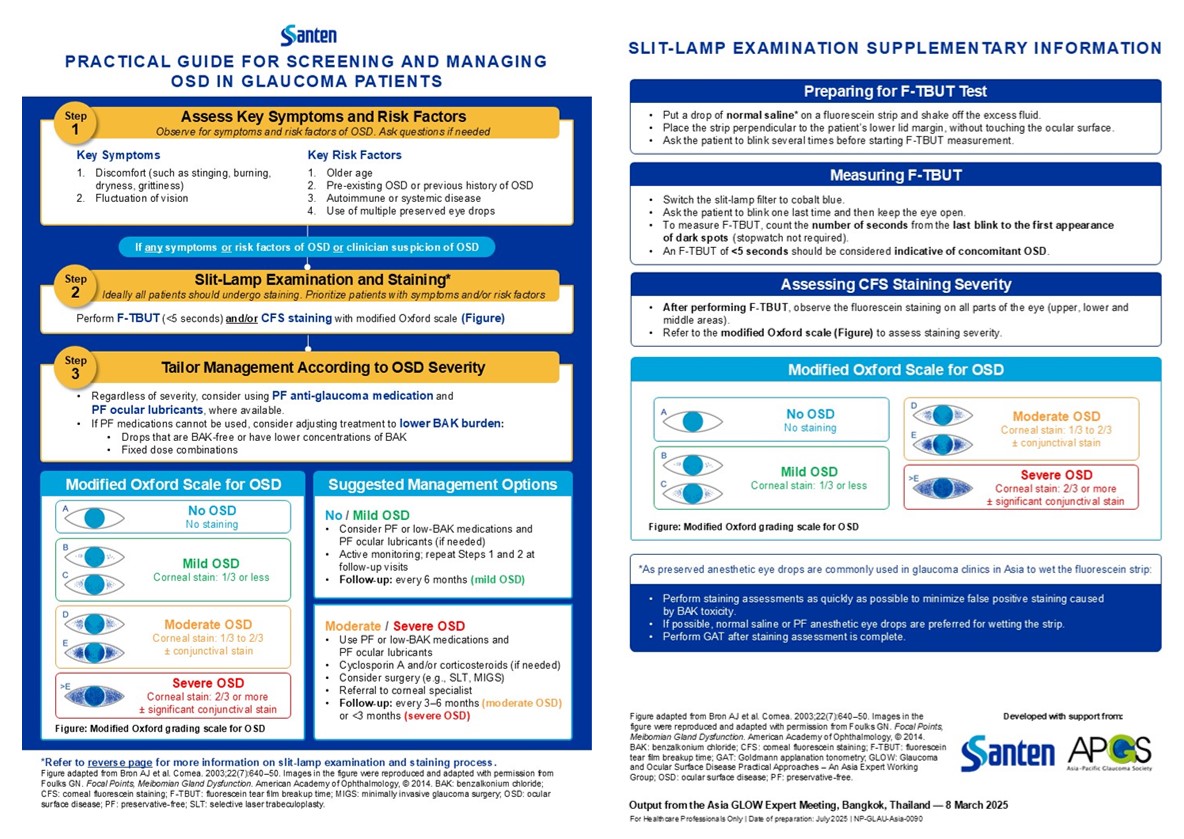
1. Practical Guide for Screening and Managing OSD in Glaucoma Patients
A simple, expert-led, Asia-specific tool to support clinicians in the efficient screening and management of OSD in glaucoma patients during daily practice.
2. Animated Video
An educational animation designed to support understanding of the Practical Guide for Screening and Managing OSD in Glaucoma Patients and to demonstrate, step by step, its application in clinical practice.
3. Master Slide Deck
A comprehensive slide deck covering OSD epidemiology, etiology, and management in the context of glaucoma to support healthcare professional education and training.
Disclaimers:
- The OSD practical guide materials are provided for informational and educational purposes only and are not intended to replace professional medical advice, diagnosis, or treatment.
- Physicians and healthcare professionals should use their clinical judgment based on each individual patient's condition when applying the information provided.