Joined Santen in 2010. After gaining experience in several R&D departments, he joined the Active Pharmaceutical Ingredients (API) Development Group. Today he is leading the development and regulatory submission of APIs for medicines used globally.
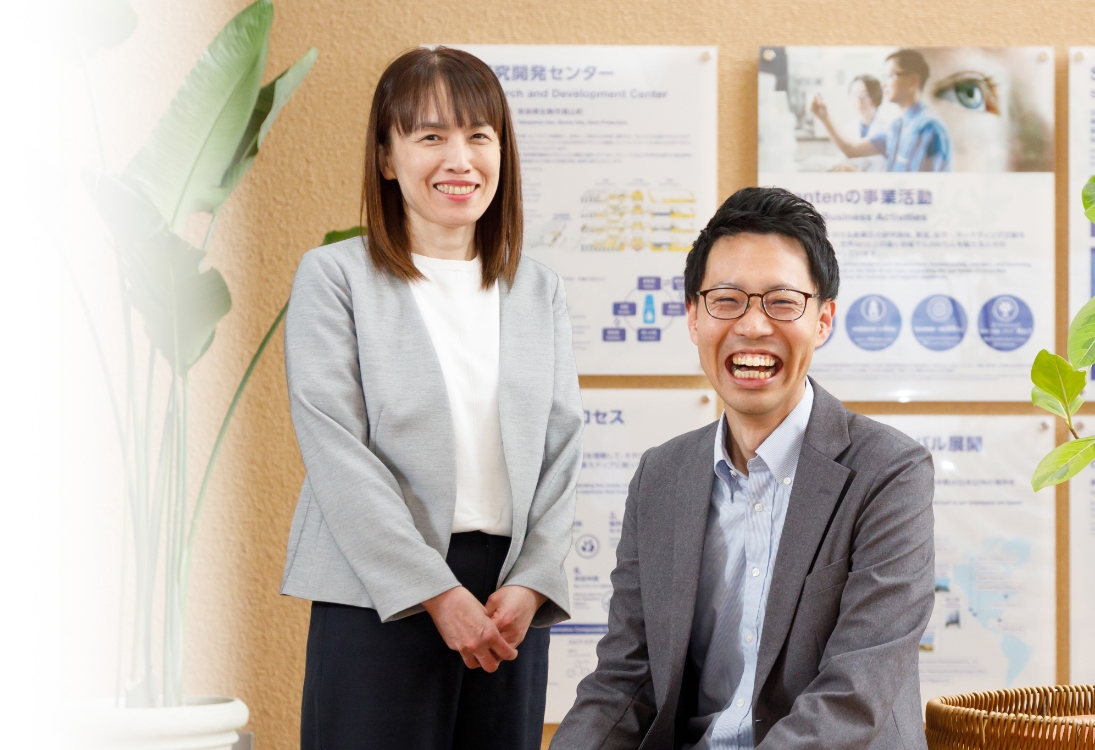
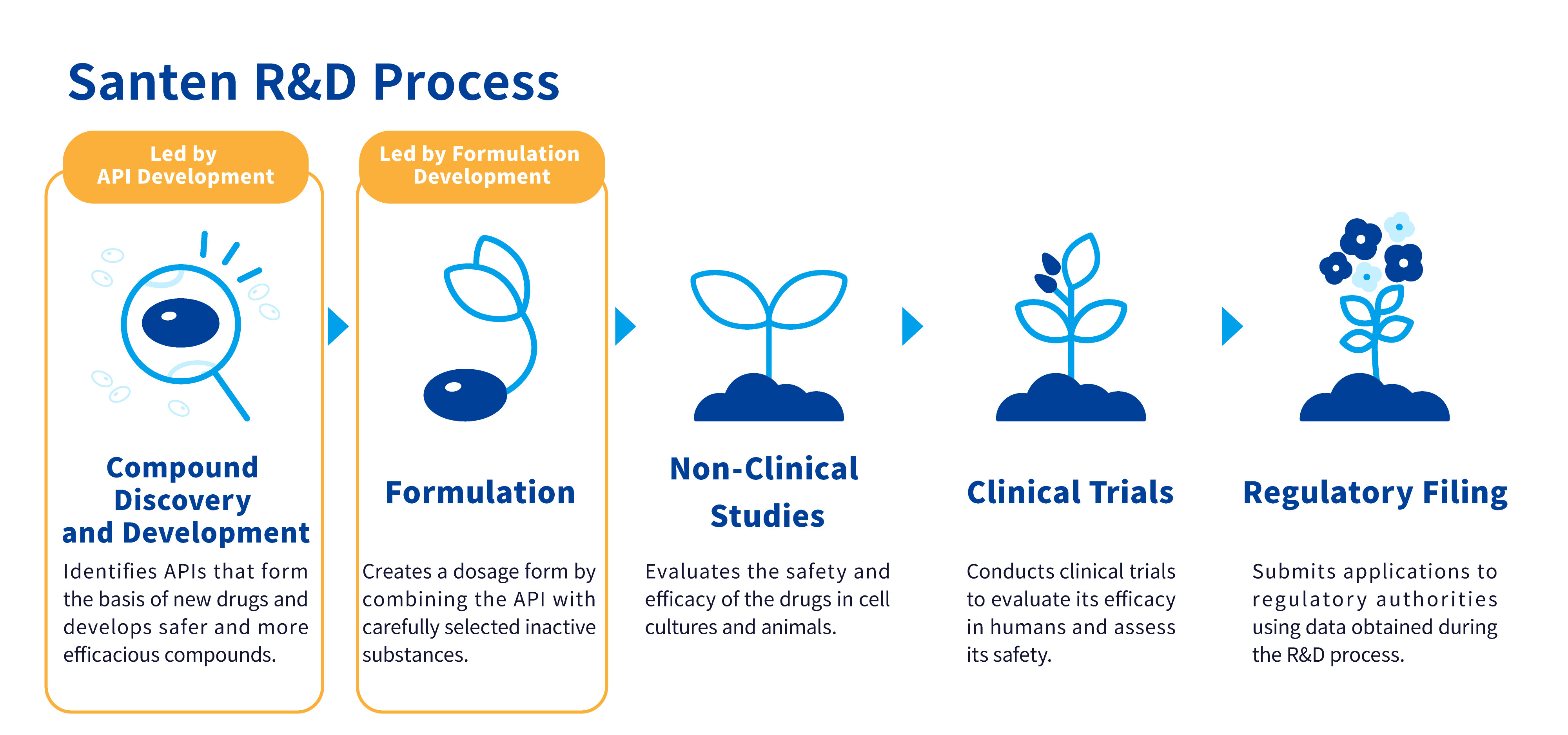
Many years and extensive research and development (R&D) are required before a new drug can be offered to patients. Santen focuses on the development of eye drops, and behind every single drop are two critical functions: Active Pharmaceutical Ingredient (API) Development, which identifies active ingredients used in medications, and Formulation Development, which transforms those ingredients into a viable medication.
For this article, we spoke with Takeshi Hayashi, who leads API Development, and Yoko Endo, who is in charge of Formulation Development, to learn more about the behind-the-scenes process of research and developing potential ophthalmic medicines and the satisfaction they derive from their respective roles.
“Drug Discovery Starting Point”: Identifying Promising Compounds and Developing Medications
―What do API Development and Formulation Development do?
Takeshi: I am responsible for developing the active pharmaceutical ingredients—or APIs—that serve as the raw materials for medications. An important part of my role involves not only selecting and designing the compounds that form the basis of these APIs (the active ingredients contained in a medication) but also verifying their quality and ensuring a stable supply of APIs of consistent quality. Achieving this means establishing quality targets and developing manufacturing methods while working closely with internal and external stakeholders to coordinate schedules, ensure stable supply, and manage costs.
Yoko: The purpose of Formulation Development is to transform the API into a form that can actually be administered to the human eye. APIs are often powders or oils that cannot be used as eye drops in their original state, so we dissolve them in water or combine them with other ingredients to create a liquid eye drop solution that can be used by patients. Our role is to design eye drops that balance safety and patient usability while optimizing the formulation to support intended performance of the active ingredient by carefully adjusting the amounts and ratios of each component.
Choosing the Optimal API Requires Effective Stakeholder Coordination
―What specific tasks do you perform in API Development?
Takeshi: We begin by determining which compound is the most suitable. Sometimes we design and select new compounds through collaborative research with other companies, while other times we adapt existing APIs already in use as systemic drugs for eye drop formulations.
API development at Santen relies on collaboration with other companies and a variety of internal departments. Since Santen does not operate its own API manufacturing facilities, working closely with contract manufacturers is essential. During this process, we discuss how to ensure the stable production of high-quality APIs and coordinate manufacturing methods and conditions with an eye on longer term supply needs. One critical aspect of our work is managing manufacturing costs. Having a high-quality API is not enough to ensure commercialization if we cannot effectively manage costs, so we conduct these discussions in close collaboration with the Production team. Meanwhile, if API manufacturing impacts the development schedule, then we may need to adjust the overall timeline in consultation with the relevant departments.
In addition, since regulatory requirements for pharmaceuticals vary by country, we must also ensure that we can meet those requirements. Preparing the technical documentation required for regulatory submissions is another key responsibility.
As you can see, API Development at Santen requires not only pharmaceutical expertise but also strong communication and coordination skills. While the broad scope of responsibilities presents its own challenges, the opportunity to collaborate with so many people and play a critical role in drug development is what makes this job so rewarding.

―What criteria do you use when selecting an API from among the many available compounds?
Takeshi: When selecting an API, it is important to ensure a stable supply of medication to the patients who need it. To achieve this, the three pillars of QCD—quality, cost, and delivery—are always front of mind during the selection process. In addition to maintaining high quality, we need to ensure that products remain cost-effective and that we have access to a stable supply of APIs of consistent quality. The challenge lies in the fact that these three factors can sometimes conflict with one another. When this happens, we engage in extensive negotiations with internal and external stakeholders to strike the right balance and make the optimal choice.
I’ve found that focusing on understanding the perspectives of partner companies and other Santen departments is a good way to promote smooth coordination. To identify each party’s “non-negotiable priorities,” we make a point of communicating proactively on a regular basis.
Overcoming Challenges to Develop Medications Patients Can Continue to Use
―What specific tasks do you perform in Formulation Development?
Yoko: Formulation Development at Santen involves a wide range of processes, so you really feel like you’re involved with a single product over the long term. Our key responsibilities include designing and manufacturing formulations for non-clinical and clinical trials, preparing documentation for regulatory submissions, and designing methods to ensure stable production at our manufacturing plants. After a product has been launched, we use market feedback to investigate the causes of any product-related issues and make improvements, and generate the data required for marketing activities.
Our role in Formulation Development is to turn the APIs identified as drug candidates into eye drops. However, this is no easy task. Since the dose for eye drops is extremely small—just a few dozen microliters—and much of it drains out of the eye or onto the nose, the formulation is designed so that a single drop aims to provide the intended amount of active ingredient for the intended use.
Furthermore, since the human eye is highly sensitive to irritants, carefully evaluating the formulation for safety and potential for irritation is essential. Ophthalmic pharmaceuticals are subject to restrictions on the types and concentrations of additives that can be used, and properties such as pH and osmolarity must be strictly controlled. And because formulation design affects the drug’s bioavailability (the extent to which it is absorbed into tissue) and how quickly effects may be observed, we must carefully balance efficacy, safety, and quality while taking the drug’s characteristics into account. Finding the optimal combination among these many conditions and shaping it into a single drop of medicine is both the fascination and the challenge of Formulation Development.

―Given these constraints, how do you go about finding the best solution?
Yoko: We evaluate each factor and identify the point where they align most effectively. Since we need to develop a medication that is not only effective but also something that patients can use comfortably and safely over an extended period of time, we need to consider other factors, such as “Does it contain unnecessary additives?”, “Is there potential for irritation?”, “Is it usable by patients?” and “Is the recommended frequency appropriate?”
When it comes to formulation, I don’t believe there is just one right answer; ten designers can come up with at least ten correct solutions. What matters most is the ability to identify a formulation that truly embodies the “Santen Spirit.” So, my role requires not only a broad perspective to identify the optimal solution from a multitude of options, but also the flexibility to adapt to change and the foresight to anticipate what lies ahead.
―How do you define “Santen Spirit” in a research and development context?
Takeshi: I think one of the defining features for us is the broad scope of work that each member handles. Even in areas where other companies might divide tasks among different departments, at Santen we’re able to manage the entire process from start to finish. That’s why I feel it broadens our perspective and makes it easier to come up with ideas that truly benefit patients. The way that researchers from various fields come together as a team at the stage of narrowing down promising compounds—and then move the process forward through a mutual exchange of ideas—is something I feel is truly reflective of the “Santen Spirit.”
Yoko: Because Santen specializes in ophthalmology, teams collaborate across functions such as preclinical and clinical development and regulatory affairs, to support drug development. We bring all of this knowledge and these ideas together when we create a new drug. Ultimately, I believe that Santen’s defining characteristic is our commitment to understanding patient needs and applying that perspective in research and development.
Expanding Eyecare Options—Each Drop Born from Santen’s Spirit of Collaboration and Shared Expertise
―How do API Development and Formulation Development complement each other?
Takeshi: In the case of eye drops, a compound’s water solubility has a significant impact on Formulation Development. Even if a compound is soluble in water, it will not be suitable for use if it immediately breaks down. This means that we need to consider whether a compound can remain stable in water and maintain its efficacy during the API selection stage.
When it comes to collaborating with Formulation Development, Yoko’s most impressive characteristic is her ability to predict—based on her experience and expertise—what kind of formulation will result from combining certain ingredients. In the world of pharmaceutical development, it’s often said that you’re lucky if even one drug that you’ve worked on makes it to market, but Yoko has contributed to multiple development programs and supported the progression of several projects through key stages.

Yoko: The feeling is mutual. It’s reassuring to know that Takeshi can always be counted on to identify APIs that meet our quality standards while ensuring a reliable supply when we need them. Consistent API quality is a prerequisite for formulation design and plays a major role in ensuring the final product’s efficacy, safety, and quality. When we have a high-quality API, we can approach its characteristics with a clear perspective during the formulation development process, making it easier to plan the design.
Unexpected issues often arise during the drug formulation development process, and when they do, our first step is to consult with the API Development team. Drawing on their specialized knowledge of physical, organic, and inorganic chemistry, they provide valuable insights into the root causes of issues and potential solutions, making them a highly reliable resource.

―What moments do you find most rewarding? What do you hope to achieve in the future?
Takeshi: One thing that makes my job truly rewarding is hearing people outside the company say, “Your support was a huge help” or “It was great working with you.” My goal for the future is to become an API developer who earns the trust of even more people through effective communication. Building relationships based on trust makes it possible for us to do our jobs smoothly and to a high standard, which in turn supports the team’s goal of advancing research that may help address unmet needs.

Yoko: Seeing the results of my formulation work applied in clinical settings reinforces the purpose of my role. I truly feel that I made the right choice in pursuing this career.
Looking ahead, I believe that conducting research and development based on a deeper understanding of what patients and healthcare professionals truly need will become even more important. There are diseases for which treatment options remain limited or cases in which continuing treatment can be difficult. Even if an API appears promising—and even if we believe it could help patients in need—it may not make it to the market due to issues at the formulation stage. I want to overcome these challenges and continue working on formulation research with the aim of supporting future possibilities in ophthalmic care.

Santen’s research and development team will continue to collaborate, leveraging their respective areas of expertise to deliver tangible value to patients and expand the possibilities of ophthalmic care.
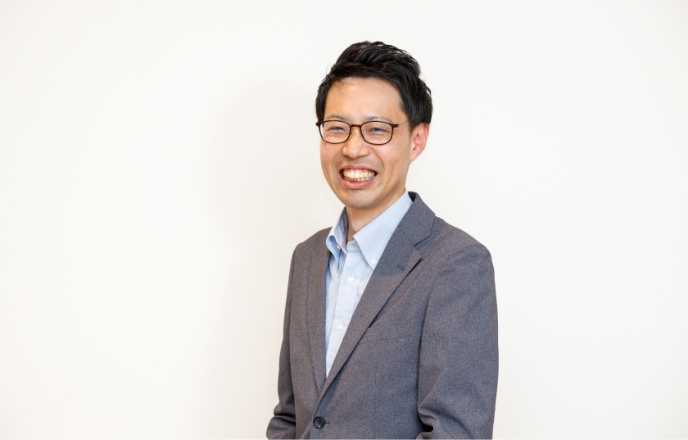
Takeshi Hayashi
Leader, API Development Group, Product Research Department, Product Development Division
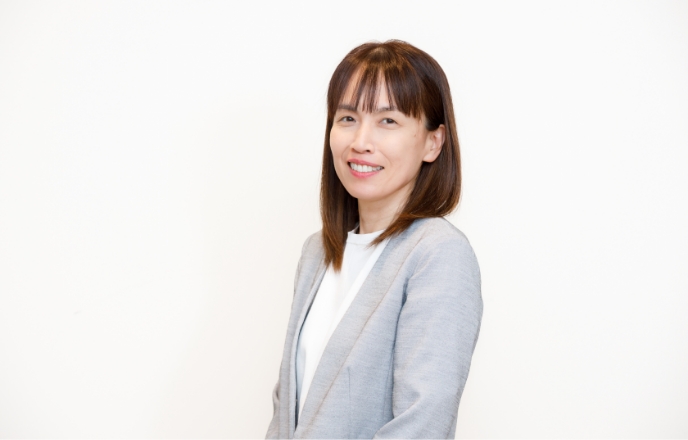
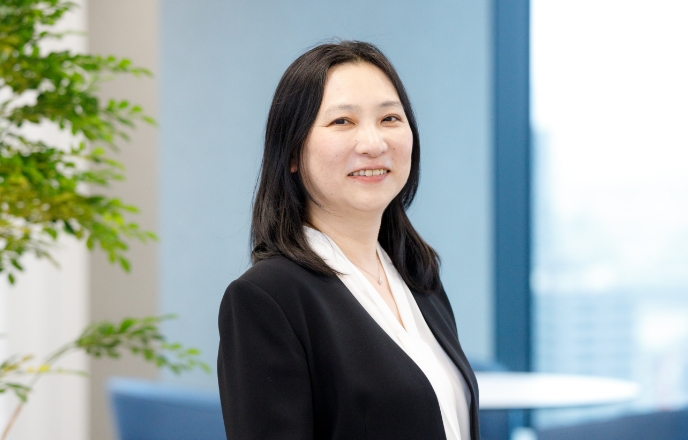
Since joining Santen in 2000, she has been responsible for Formulation Development. She is primarily involved in new drug development projects and is responsible for overseeing formulation development of prescription drugs on a global scale.
*Profile information is current as of the date of publication
Disclaimer: This article is intended for informational purposes only and reflects personal experiences in API and Formulation development. It does not promote any specific product or treatment.