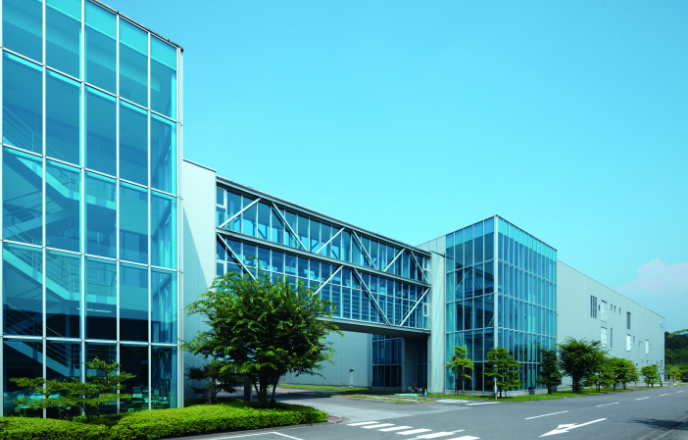
Makito joined Santen in 1993. He was responsible for the eye drop container production line at the Noto Plant for many years before being transferred to the Shiga Plant in 2014, where he was named a team manager in 2015. Returning to the Noto Plant in 2016, he has been in his current position since 2020. On his days off, Makito’s routine involves working up a sweat raking leaves, followed by an afternoon spent watching movies while sipping whiskey—a hobby he suddenly became hooked on after turning 50.
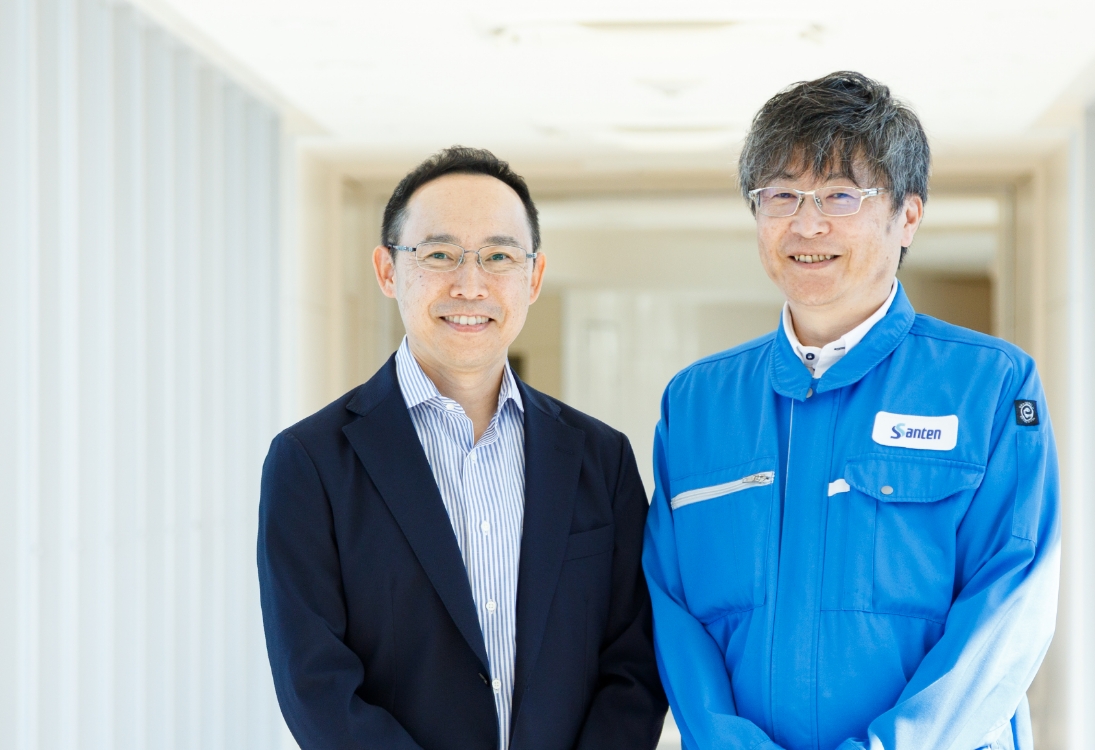
Since its founding in 1890, Santen has remained true to its Core Principle, conducting its business with the primary goal of contributing to patients and those who care for them. But how is that spirit put into practice in each workplace and passed on to younger generations? For the answer, we turned to two Santen leaders with many years of experience and asked them to share their stories.
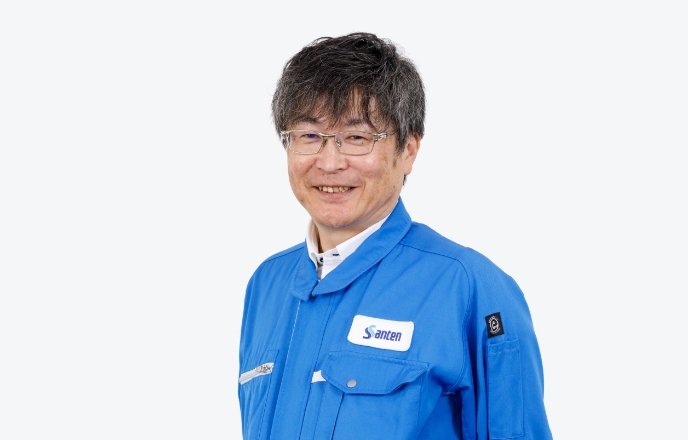
Makito Jomen
Plant Manager, Noto Plant, Production Division
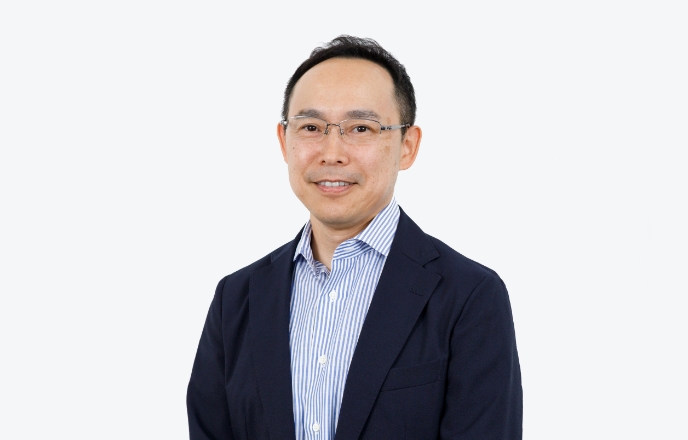
Kazuhito Yamada
Division Manager, Product Research Division, Product Development Headquarters
Since joining Santen in 1997, Kazuhito has been involved in research and development at the Nara Research and Development Center but has also worked at Santen Oy (Finland) and the Shiga Plant. He has been in his current position since 2020. His hobbies include watching soccer, playing golf, and traveling to hot springs. On his days off, Kazuhito recharges by enjoying sports and travel, which help him cultivate new ideas and the energy to take on new challenges.
*Profile information is current as of the date of publication
Ensuring Stable Supply of High-Quality Products to Meet Patient Needs
―You’ve both been with Santen since the 1990s. Over your respective careers, are there aspects of your work ethic or particular standards that you feel continue to be valued in your workplace?
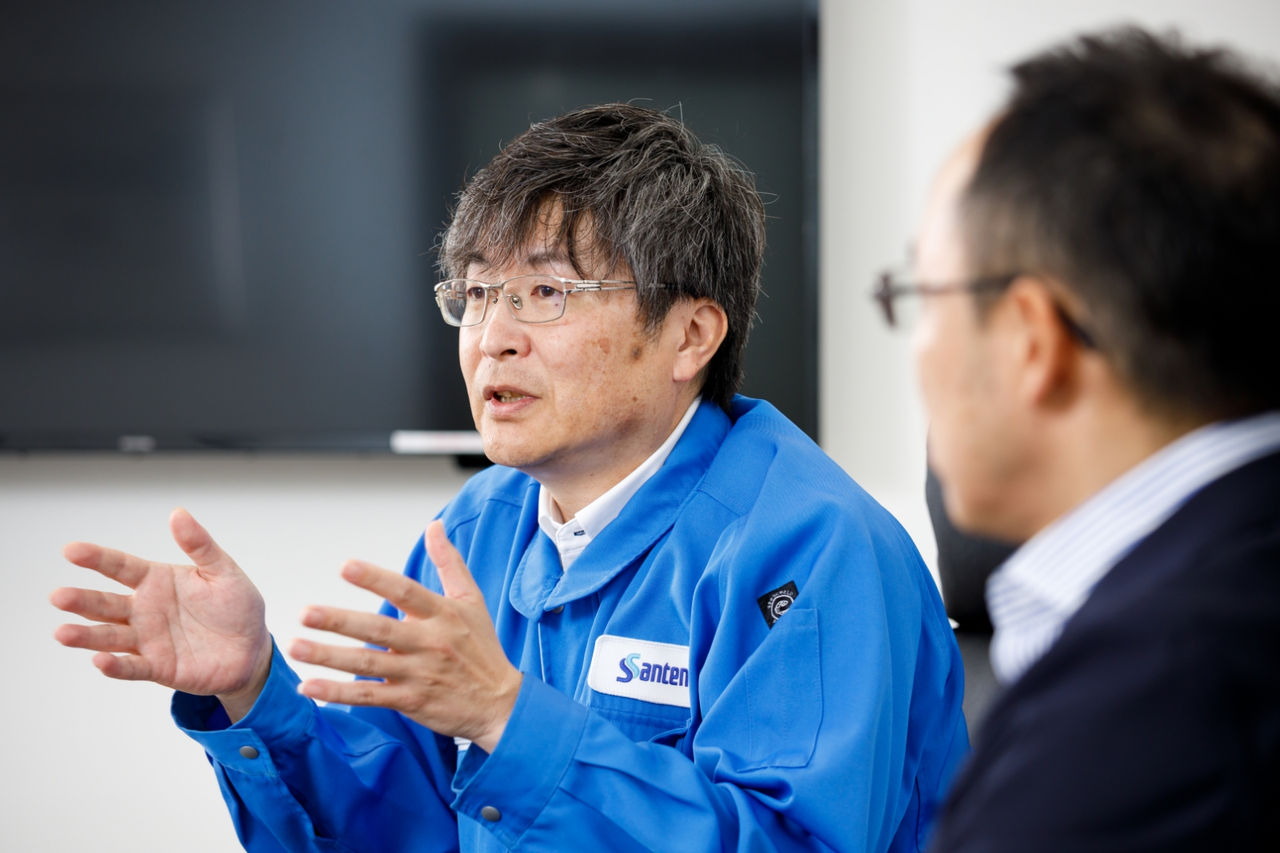
Makito: Since the day I joined, my workplace has been guided by one principle: “The plant’s mission is the stable supply of products; stockouts will not be tolerated.” To ensure that product supply is never interrupted, the expectation that the entire plant would respond to unexpected situations by working together as a team has always been a given. Even today, we continue to strive to maintain the most stable supply possible while prioritizing employee safety and quality assurance.
Kazuhito: My feeling is that in any field of research and development, significant value is placed on having an attitude geared toward “taking on new challenges.” In addition to the medication’s efficacy, safety, and quality—which go without saying—factors such as how the eye drops feel when applied and the frequency of administration also matter. Which is why, from day one of my career, product development and improvement efforts have also routinely taken into account factors that impact patient comfort and convenience.
―How are these attitudes passed down within the workplace?
Makito: First, a clear policy has been established positioning stable supply as the mission for all departments involved in production. Second, it is firmly incorporated into both the plant-wide goals and the individual performance objectives of every employee, ensuring that it remains a focus of day-to-day activity.
Kazuhito: My feeling is that the mindset of taking on new challenges—which has become deeply rooted in R&D—is the direct result of our collaboration with the Sales and Marketing Division. Medical Representatives (MRs) and marketing staff, who interact with doctors and healthcare professionals on a daily basis, constantly strive to identify unmet patient needs. While R&D also strives to identify these needs, we continue to explore how we can develop products that incorporate the insights gathered by MRs and marketing staff. In doing so, we often find it necessary to venture into uncharted territory—such as bringing in external technologies that Santen does not currently possess.
―If the guideline for development is always “meeting patient needs,” then taking on new challenges naturally becomes the means to that end, right?
Kazuhito: Yes. I believe one of Santen’s greatest strengths is continuing to listen to patient feedback, even after a product has been launched, and then making improvements—such as reducing the number of times each day eye drops need to be administered. This commitment has become firmly established within the organizational culture, so even when the head of the R&D changes, our approach does not.
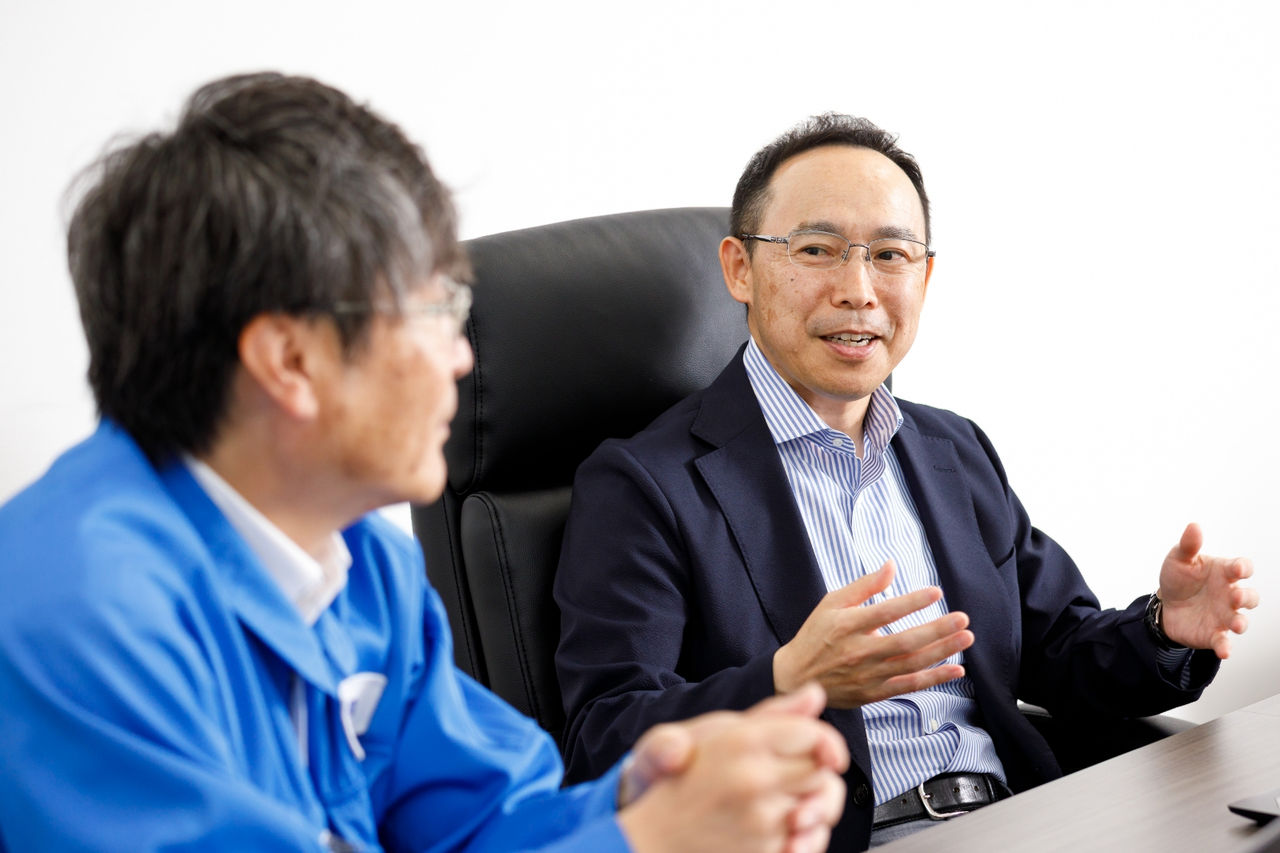
Makito: When it comes to product improvements based on patient feedback, the same applies to packaging. The Dimple Bottle—Santen’s first proprietary eye drop container—was developed to address the shortcomings of previous containers, such as the solution not being dispensed in the intended direction and inconsistent droplet volume. Uncompromising pursuit of a solution eventually allowed us to achieve stable, single-drop dispensing in 2002, a level of performance that has remained consistent up to the present day.
The Most Important Thing? Discussing Issues Across Departments and Working Together to Overcome Challenges
―Meeting unmet patient needs requires both time and resources. How do you avoid conflicts over priorities and perspectives?
Kazuhito: When we cross-reference data from R&D and Sales and Marketing—such as the number of patients with unmet needs and the cost-effectiveness of improvements—our priorities become clear, so there is little conflict. All departments share a common understanding of what matters most: “Ensuring that as many patients as possible can lead happy and fulfilling lives.” If we lack enough information to make a decision, then we will seek input from employees not directly involved in the development project or conduct interviews with patients.
―Speaking of priorities, when the plant was damaged during the 2024 Noto Peninsula Earthquake, didn’t you, as plant manager, have to make some very difficult decisions?
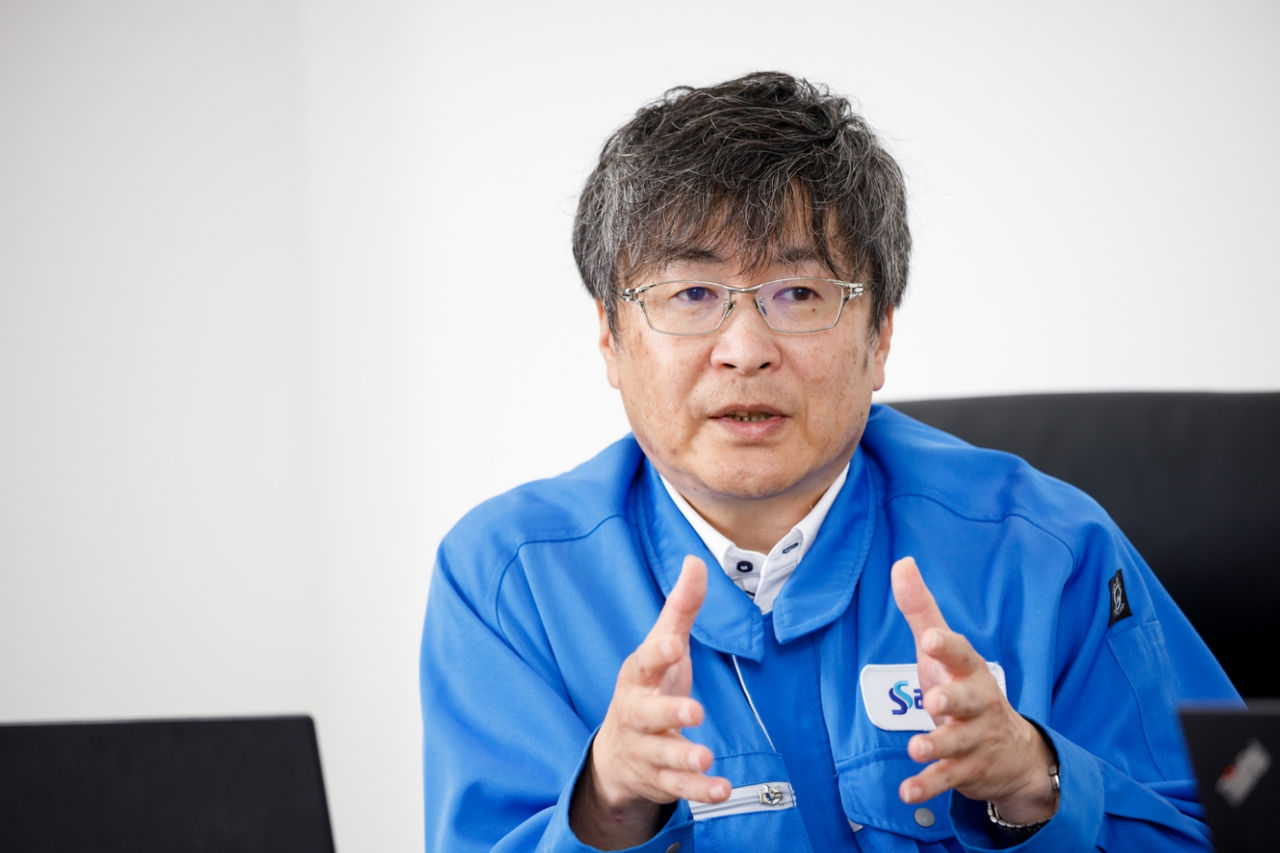
Makito: That’s right. It was clear that all nine filling lines and eleven packaging lines had probably sustained some damage, and that resuming production would take some time. So the first step was to get the warehouse in shape so we could ship the finished goods inventory as quickly as possible. The next step was to restore the packaging lines so that products already filled into containers could be packaged and turned into finished goods. We worked closely with various departments at the Noto Plant, headquarters, and the Shiga Plant to discuss product supply priorities and staffing arrangements, and then drew up the fastest possible schedule for getting the production lines back up and running.
―Quite a few of your colleagues’ homes were damaged by the earthquake.
Makito: That’s correct. Some homes were completely or partially destroyed, so not everyone was able to come to work. Nevertheless, a significant number of employees contributed to the recovery effort. In fact, the first facility at the Noto Plant brought back online—even before the warehouse—was the cafeteria, to provide warm meals to everyone.
The Shiga Plant sent personnel to assist with restoration of the factory, including equipment inspections, but also donated a large number of plastic water tanks for our employees. This allowed Noto Plant employees whose homes were without running water to take some home from the plant.
Kazuhito: Another of Santen’s strengths is our ability to support one another across our various sites when the need arises. Looking ahead, we need to establish a system that allows us to manufacture a single product at multiple sites—both to ensure uninterrupted product supply during an emergency and to meet long-term product demand. The Noto and Shiga plants are already collaborating and pushing ahead with initiatives to supply products from both plants for new drug development as well.
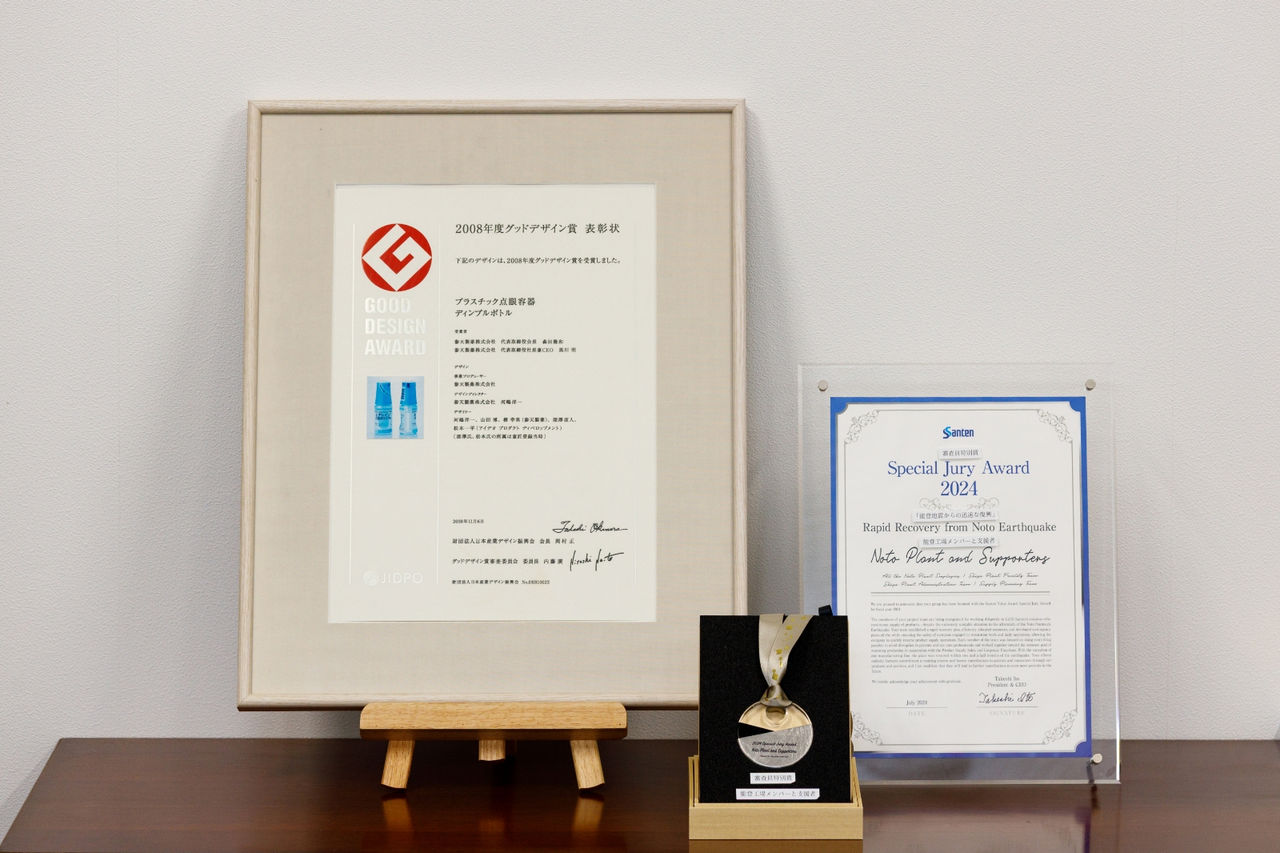
The Dimple Bottle eye drop container won a Good Design Award from the Japan Institute of Design Promotion in 2008, and the company’s efforts toward rapid recovery from the Noto Peninsula Earthquake received the Judges’ Special Award at Santen Group’s 2024 internal awards ceremony.
Future-Proofing Santen’s Commitment to Patients and Pride in One’s Work
―How will you pass on Santen’s work ethic and attention to detail to the next generation?
Makito: At the Noto Plant, we are implementing initiatives to foster a culture where every employee working on the production floor “Think and act for quality.” To ensure uninterrupted supply of medications to the people who need them, employees on the production floor must take pride in the fact that “the products we make are used by patients.” Since employees rarely have the opportunity to meet patients, we use posters and slogans to help them visualize who our patients are. In the future, we hope to create opportunities for direct face-to-face engagement with patients.
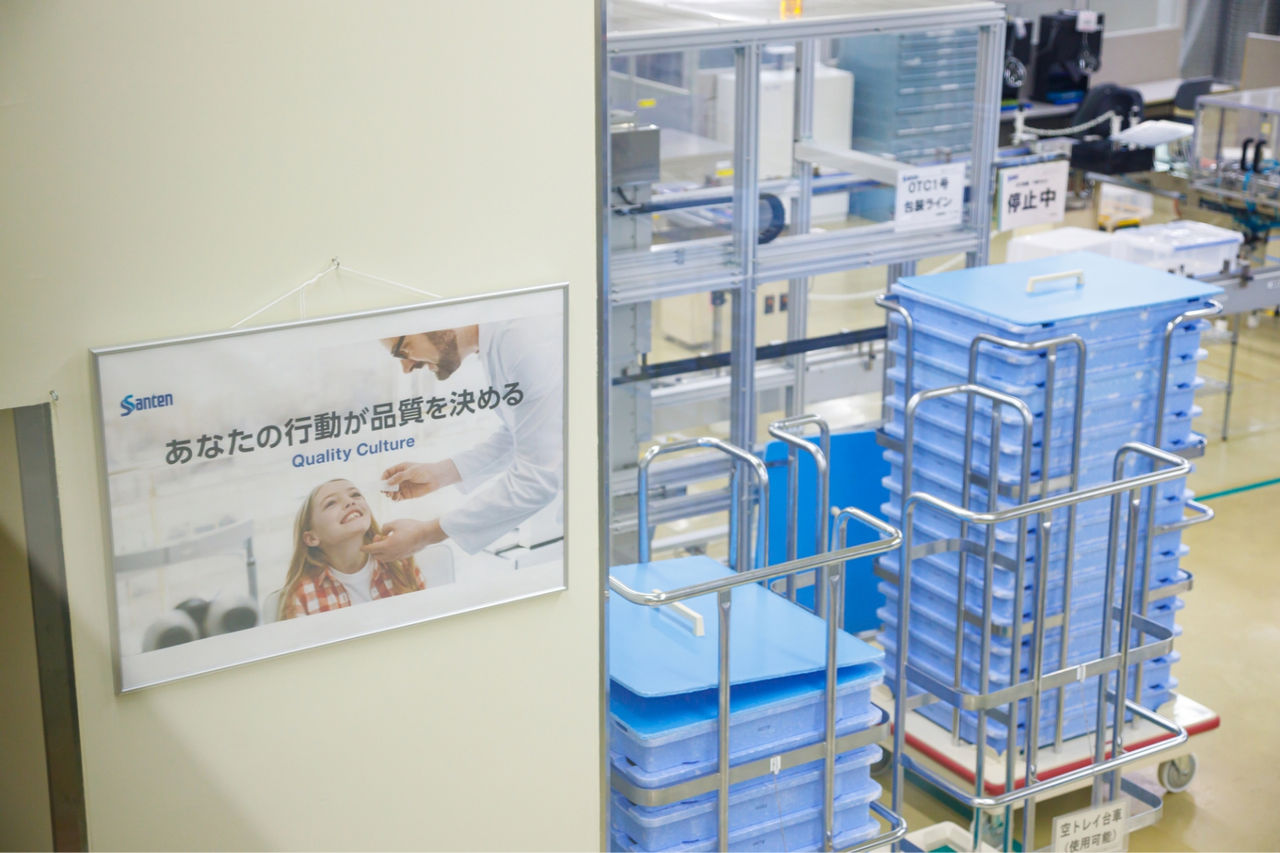
A poster in the Noto Plant that says, “Quality is in your hands.” The same design is used for the login screen on employee computers.
Kazuhito: R&D’s “challenge to innovate” is supported by a culture of mutual support, as reflected in Santen’s Value of “Achieve Together.”
When a production plant is faced with a challenge, R&D provides support; when R&D is testing a new product, the production plants cooperate. When a problem arises, we discuss it with various departments to figure out how to resolve it and then see that process through to completion. The Nara R&D Center accepts quality control staff on secondment from the Noto and Shiga plants so that we can pass on the spirit of mutual support to the next generation.
The experience of working at another site helps them understand the operations at each location and build their professional networks, so when they return to their workplace, they’re effectively “hubs” connecting all of these sites. It would be great if we could eventually expand this personnel exchange to include production staff as well.
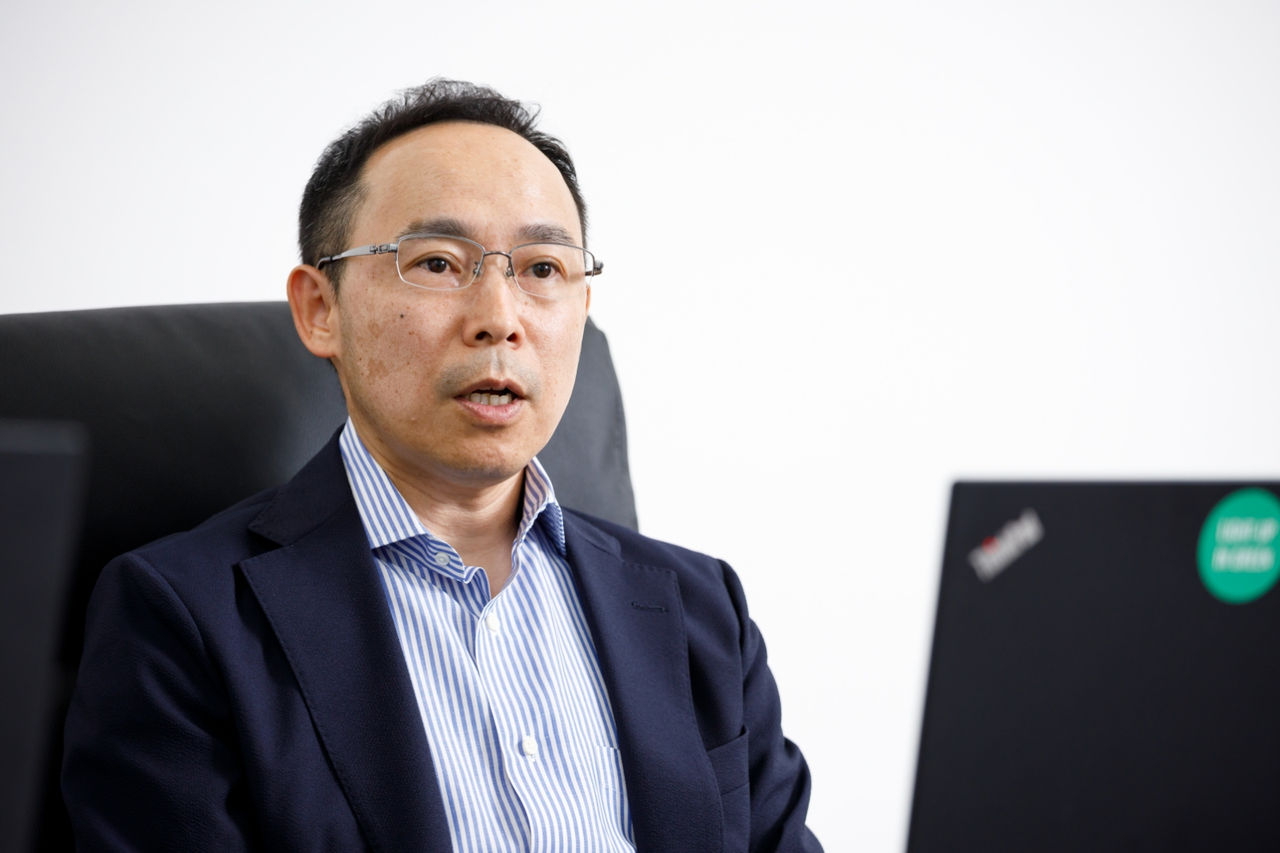
Makito: The Noto and Shiga plants also exchange personnel to promote knowledge transfer and other objectives. I worked at the Shiga Plant for two years, and gained so many insights from that experience—I was able to confirm that their approach to product supply and productivity improvement is the same as Noto’s while also learning some new ideas. When it comes to passing on the values we cherish without imposing them on others, gaining a real sense of things through hands-on experience in the course of your work is essential.
―What kind of future would you like to build based on Santen’s Corporate Philosophy?
Kazuhito: I want to meet the needs of more patients by addressing unresolved issues and offering new treatment options. If we keep thinking along the same lines as we have in the past, then we’ll come up with similar solutions. I want to convey to the next generation the importance of continuing to break free from established frameworks and support the development of truly unique products.
Makito: I strongly identify with Santen’s vision, “Happiness with Vision.” By working to create an environment where employees can truly appreciate the value of their work, and by continuing to ensure product quality and stable supply, I hope to continue bringing happiness to people around the world through “sight.”
Santen Pharmaceutical Co., Ltd.
Company Registration Number: 5120001051819