Areas of Interests
Santen identifies priority diseases to address by starting from patient needs, considering the maturity of technologies, and builds disease strategies accordingly. In our existing therapeutic areas—including glaucoma, dry eye, allergy, and age-related macular degeneration (AMD)—we are engaged in research and development grounded in the specific characteristics of each disease, aiming to create new treatment options that address patient needs. Looking ahead to the realization of what Santen aspires To-be in 2035, we are also advancing the development of solutions in new frontier areas such as myopia, ptosis, genetic eye diseases, and pterygium.
Holistic coverage of ophthalmic area including diseases with limited treatment options
| Existing therapeutic areas | Glaucoma | Dry eye | Allergy | AMD* |
| New frontier | Myopia | Ptosis | Genetic eye diseases | Pterygium |
Myopia: Our approach
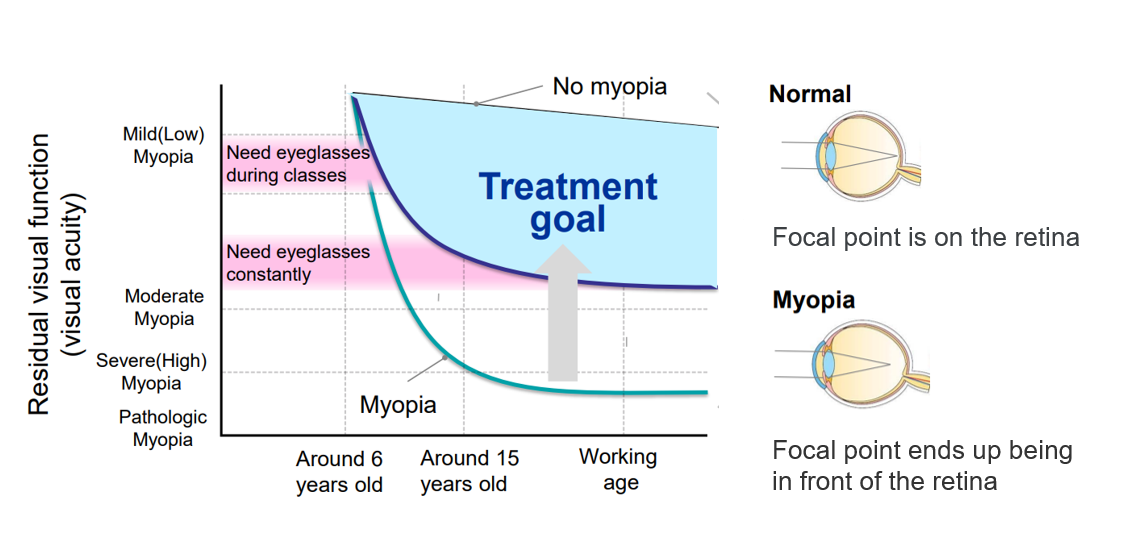
We are addressing myopia comprehensively by conducting research into the experiences and needs of patients and their families across all stages of the disease, and by leveraging these insights in our approach. To protect children from the risk of vision problems associated with myopia, we are working to promote a proper understanding of the disease, informed by the expertise of medical and research professionals. Our initiatives include developing a low concentration atropine formulation along with proper disease awareness activities, advancing a next-generation drug with better efficacy and safety, and creating greater value for patients through collaboration with external partners during drug discovery.
Protecting children from potential risk of vision problems
- Disease awareness activities in collaboration with KOLs
- Development and value maximization of low-dose atropine formulation
- Overcome the challenges of low-dose atropine with next-generation drug
- Collaborative study to accelerate elucidation of pathology and drug discovery
Myopia affects
30% of people in 2020
50% of people in 2050 in the world *1
*1 Ophthalmol. 123, 1036-1042, 2016
Important to prevent progression of myopia at school age
Ptosis: Our approach
Ptosis is a unilateral or bilateral drooping of the upper eyelid that usually occurs from a partial or complete dysfunction of the muscles that elevate the upper eyelid. It can lead to decreased visual fields and lower quality of life (QOL) for patients. Tens of millions of adults are suffering from ptosis globally*2,3. The oxymetazoline ophthalmic solution we are developing as a treatment for blepharoptosis was approved in Japan in December 2025, and Phase 3 clinical trials are currently underway in Europe and China. Oxymetazoline has been reported to act as an agonist for the α₁- and α₂-adrenergic receptors. By acting on α receptors in Müller’s muscle, which contributes to eyelid elevation, the product induces muscle contraction and lifts the upper eyelid.
*2 Age Ageing 24, 21-24, 1995, *3 Eye 31, 940–946, 2017
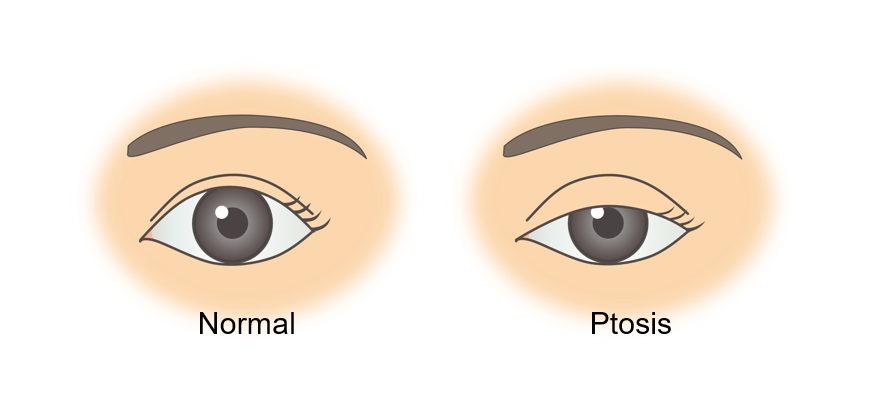
Protecting patients from defect of visual field and decrease in QOL
- Value maximization and region expansion of STN1013800
- Educational activities
The anterior segment of the eye
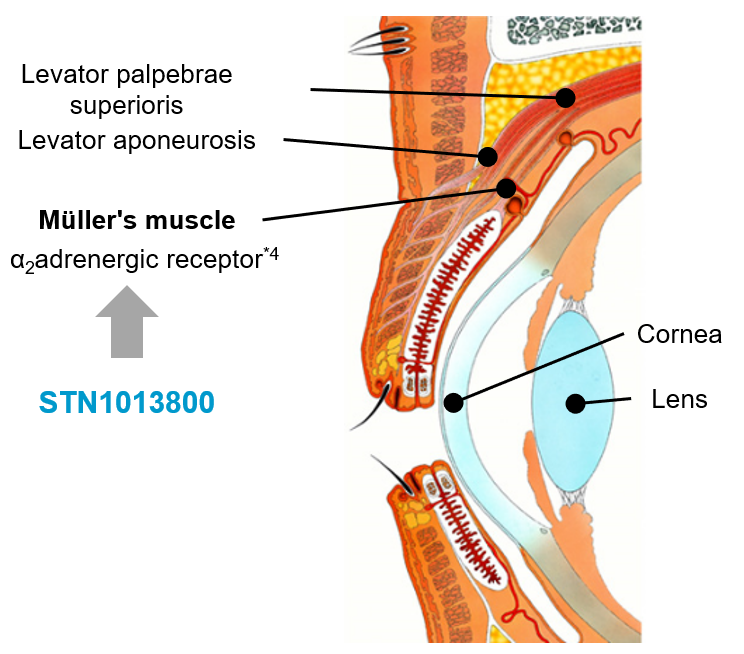
*4 Ophthalmic Plast Reconstr Surg 15, 92-99. 1999